The short version
- - The UK media spent years running scare stories about heat pumps. The same playbook they used on EVs.
- - Gas boilers in new builds are already banned. Existing homes will follow by 2035.
- - If you have solar panels, a heat pump is the obvious next step - you're generating free electricity, use it to heat your home.
- - Modern heat pumps work down to -15C. The UK rarely drops below -5C.
- - The Boiler Upgrade Scheme covers up to £7,500 of the install cost.
- - Solar + heat pump + good insulation = a home that barely needs the grid.
The Media Campaign Against Heat Pumps
If you've been following the tabloids, you'd think heat pumps are a government conspiracy to freeze British families. The Daily Mail ran a piece in 2023 called "The Great Heat Pump Revolt" featuring families huddled under blankets, pensioners using plug-in radiators, and a retired engineer who'd installed a log burner to supplement his heat pump.
One particularly memorable story featured a family who reportedly "regretted" their heat pump because the house was too cold. The photo showed the family looking miserable in their living room. Their young son was barefoot and shirtless. In a story about a family supposedly freezing. The image was staged to sell a narrative, and if you've spent any time around tabloid energy coverage, you'll recognise the pattern.
It's the same playbook they ran on electric vehicles. "Range anxiety." "Catching fire." "Stranded on the motorway." Years of scare stories, and now EVs outsell petrol cars in most of Europe. The media moved on. They always do.
The truth about heat pumps is more boring than the headlines suggest. They work. They've worked for decades in Scandinavia, where winters are genuinely harsh. The UK's mild, wet climate is close to ideal for them. Most of the horror stories trace back to early installations with poor insulation, undersized systems, or installers who didn't know what they were doing. The technology and the installer base have both matured considerably since then.
Gas Is on Borrowed Time
This isn't speculation. It's policy.
The Future Homes Standard, which takes effect in 2025, bans gas boilers in all new-build homes. No new house in England will have a gas connection from that point forward. Scotland and Wales have similar timelines.
For existing homes, the government's target is no new gas boiler installations by 2035. Your current boiler won't be ripped out, but when it dies, the replacement will almost certainly be a heat pump. The direction of travel is clear, and it's not going to reverse. Every major party supports the 2050 net-zero target, and residential heating is one of the biggest remaining carbon sources.
The question isn't whether you'll switch. It's whether you switch now, with a £7,500 government grant available, or later, when grants may be smaller and installer demand is through the roof.
Solar + Heat Pump: The Obvious Combination
If you already have solar panels, a heat pump should be your next investment. The logic is straightforward: you're generating free electricity on your roof. Instead of exporting it to the grid at 7p/kWh, use it to run a heat pump that delivers three units of heat for every unit of electricity consumed.
A 4kW solar array generates around 3,400 kWh per year in southern England. A well-sized heat pump for an average UK home uses about 4,000-5,000 kWh of electricity annually. With a battery to shift solar generation to evening hours, you can cover a large chunk of your heating demand with electricity you generated yourself, for free.
The combination changes the economics entirely. You're not comparing heat pump electricity costs against gas prices. You're comparing free solar electricity running a heat pump against paying for gas. There's no contest.
Even without solar, heat pumps make financial sense for most well-insulated homes. With solar, they're a no-brainer. It's the modern path to a net-zero household: insulate properly, put panels on the roof, run a heat pump off the panels. Your heating bills collapse.
How Heat Pumps Actually Work
A heat pump is a fridge running backwards. Instead of pulling heat out of your food and dumping it into your kitchen, it pulls heat from outdoor air and moves it inside. Even air at 0C contains usable heat energy. A refrigerant absorbs that heat, a compressor concentrates it, and the system delivers it to your radiators or underfloor heating.
The key metric is COP - coefficient of performance. A COP of 3 means for every 1 kWh of electricity the pump uses, it delivers 3 kWh of heat. Gas boilers max out at around 0.92 kWh of heat per kWh of gas burned. Even when electricity costs more per unit than gas, the heat pump's efficiency advantage means lower bills overall.
Real Costs in 2026
A typical air source heat pump installation costs £8,000-£14,000 for a standard three-bedroom semi. The Boiler Upgrade Scheme (BUS) provides a £7,500 grant, bringing the out-of-pocket cost down to £500-£6,500 depending on system size and complexity.
Running costs depend on your insulation, the system's COP, and your electricity tariff. For an average UK home with reasonable insulation (EPC C or better), expect annual heating costs of £600-£900 on a standard electricity tariff. Compare that to £800-£1,200 for gas at current prices.
The Grant Won't Last Forever
The Boiler Upgrade Scheme has been extended to 2028, but the £7,500 grant level isn't guaranteed beyond that. As uptake increases and the 2035 deadline approaches, there will be less incentive for the government to subsidise what will become mandatory. Acting while the full grant is available saves thousands.
If you're running a heat pump partly on solar electricity, the running cost drops further. Households with solar and a battery routinely report heating costs under £400 per year.
What the Horror Stories Actually Tell Us
Most heat pump complaints fall into three categories, and none of them are about the technology itself.
Poor insulation. A heat pump in a draughty Victorian terrace with single glazing will struggle, just like a gas boiler would. The difference is that a gas boiler brute-forces the problem with high-temperature output. A heat pump works at lower flow temperatures and needs the building to retain heat. The fix isn't to blame the pump. It's to insulate the house first.
Undersized systems. Early installations sometimes fitted systems that were too small for the property. An undersized heat pump runs flat-out and never reaches comfortable temperatures. This is an installer error, not a technology problem. Proper heat loss calculations prevent it.
Inexperienced installers. The MCS certification scheme exists for a reason. The first wave of installations included some cowboys who didn't understand heat pump design. The installer base has grown and improved. Always use MCS-certified installers and check references.
The Net-Zero Home
The path to a genuinely low-energy home follows a clear sequence:
- Insulate. Loft, walls, floors, windows. Reduce the amount of heat your home loses. This is always step one.
- Solar panels. Generate your own electricity. South-facing roof preferred, but east-west works too.
- Heat pump. Replace the gas boiler with a system that runs on electricity - ideally, the electricity from your own roof.
- Battery storage. Shift solar generation to when you need it. Optional but increasingly cost-effective.
A home that follows this sequence can realistically cut energy bills by 70-80% compared to a typical gas-heated property. Your home becomes less dependent on the grid, less exposed to energy price volatility, and far more comfortable.
The tabloids would rather show you a pensioner in a blanket. The reality is a warm, quiet house that costs a fraction of what your neighbours pay to heat.
Is Your Home Ready?
Heat pumps work best in homes with an EPC rating of C or better. If your rating is D or below, focus on insulation first. Cavity wall insulation, loft insulation, and draught-proofing are all cheaper than a heat pump and will improve your comfort regardless of what heating system you use.
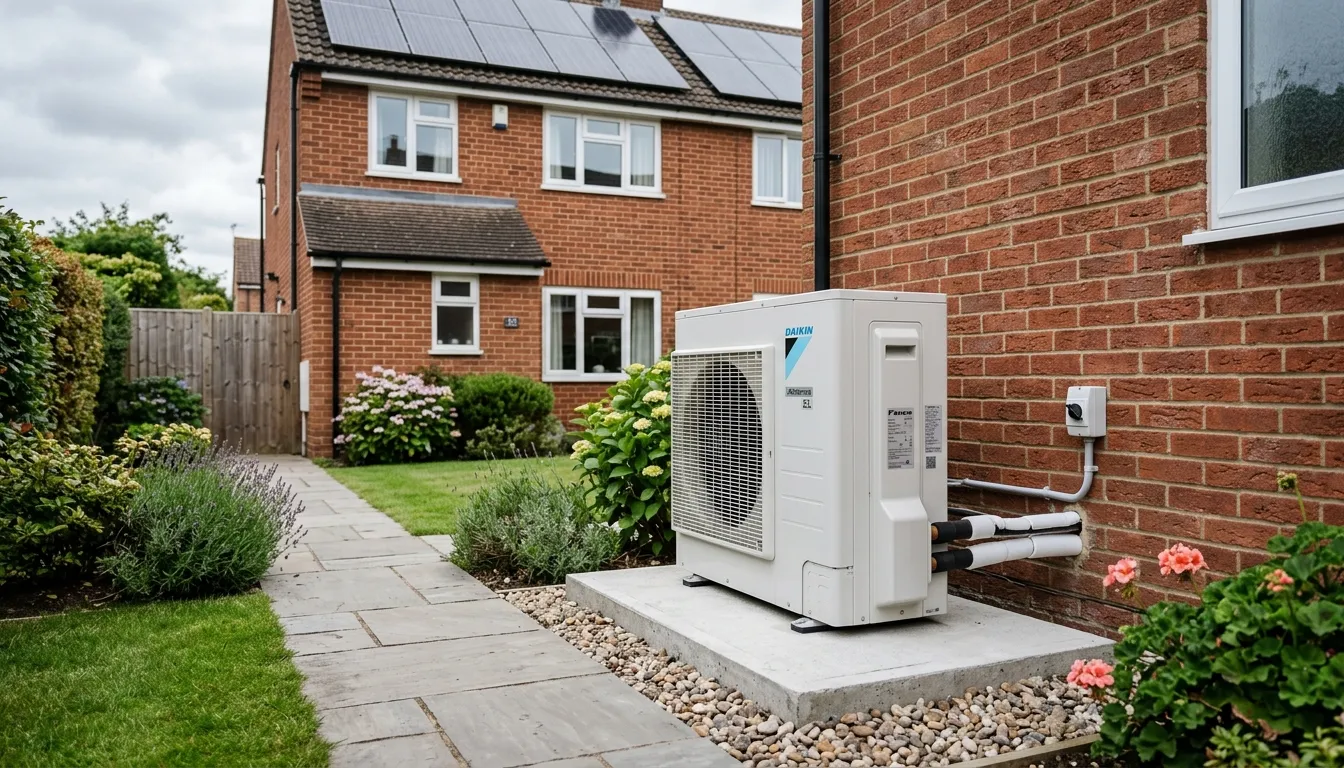
You'll also need some outdoor space for the external unit - roughly the size of a large suitcase on a wall bracket or a washing machine on the ground. Modern units are quiet (around 40 dB at one metre - about the same as a fridge). Noise complaints were valid with early models but aren't a real concern with current generation equipment.
If you're not sure where your home stands, an EPC assessment is the starting point. It tells you exactly where heat is escaping and what to fix first.
Sources
Want to know if your home is heat pump ready?
Start with an EPC assessment. We'll tell you exactly where your home stands and what to do first - whether that's insulation, solar, a heat pump, or all three.
Get a Free Assessment