TL;DR
- Cavity wall insulation (CWI) can cause moisture problems when poorly installed or when the wall already had damp issues before installation
- Common signs include rising damp, mould growth, and water stains on interior walls after installation
- CIGA guarantee claims are possible but require documentation and have time restrictions
- Extraction and repair costs can exceed £2,000–£15,000 per property
- CWI works well in proper cavity wall construction with professional installation and pre-assessment
- Solid or exposed walls may need external wall insulation (EWI) or internal wall insulation (IWI) instead
- Always resolve moisture issues before installing any insulation
Cavity wall insulation has long been the go-to solution for improving thermal efficiency in Victorian and Edwardian homes. However, this popular measure isn't without its pitfalls – particularly when installations haven't adhered to best practices and building science principles. In a growing number of cases throughout UK housing stock, what was meant to be an energy saving improvement has instead created moisture headaches and substantial repair costs for homeowners.
The Promise of Cavity Wall Insulation
Introduced during the post-war building boom, cavity wall insulation was designed to eliminate heat loss through walls by filling the empty space between inside and outside walls. When properly installed in properties built with cavity walls (generally from 1920s onwards), it should be invisible to residents. It can dramatically reduce energy bills and improve a home's overall thermal comfort.
According to the Energy Saving Trust, properly installed cavity wall insulation typically offers around 20-30% improved energy efficiency – especially for homes with exterior walls that do not already have internal insulation or internal lining materials. For many older properties that originally had solid walls or were poorly insulated, this can mean a more comfortable home at a significant saving in heating costs.
When the Fix Becomes the Problem
However, not every cavity wall installation produces the desired outcome. In fact, the problems with CWI installations have become increasingly evident over the past decade. There has been a growing body of evidence documenting instances where CWI actually caused rather than prevented damp and moisture issues.
Signs Something's Gone Wrong with Cavity Wall Insulation
- Rising damp: Water appearing up the inside wall near floor level after installation.
- Mould growth: Spotty black or white mould, particularly in corners and around windows after insulation work.
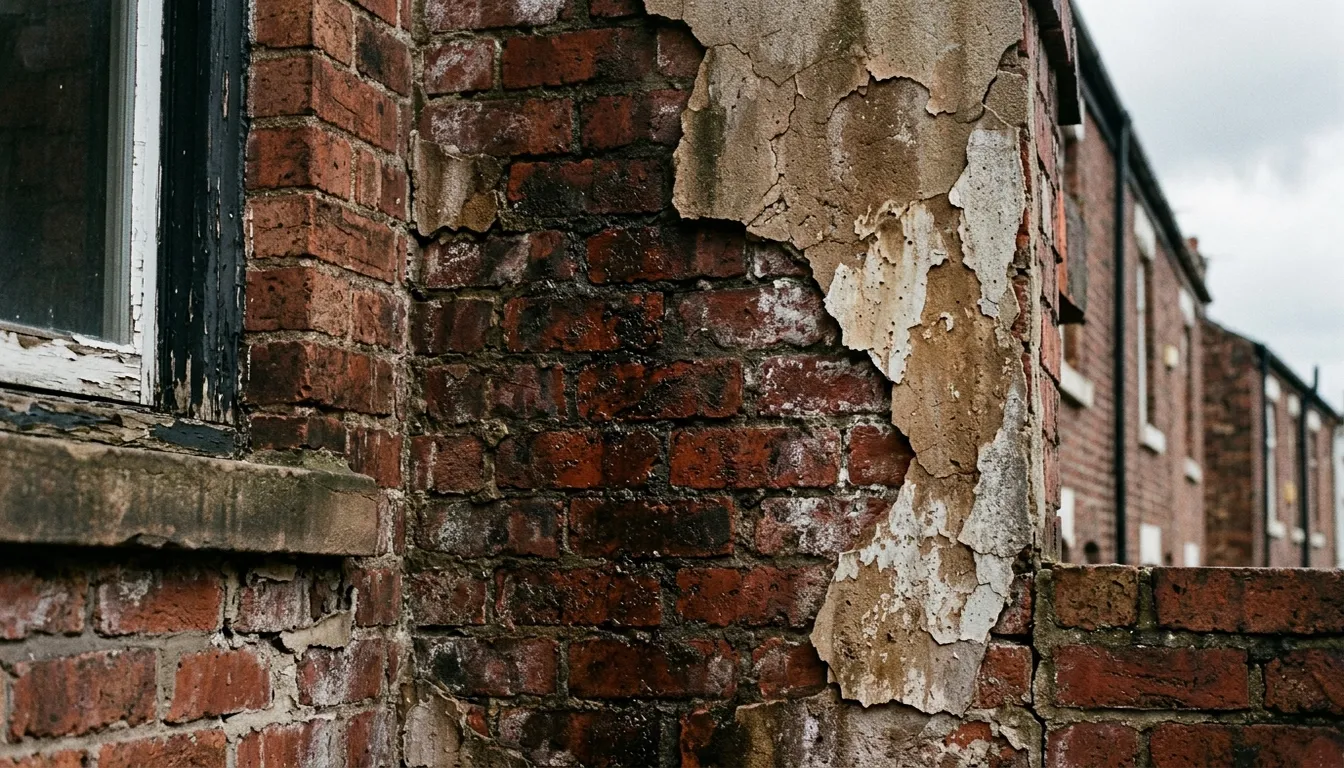
- Water stains: Circular water marks on inside walls, often appearing on the side nearest to where cavity wall insulation was installed.
- Wall cracking: Visible cracks that may appear near areas where insulation was blown in or where mortar joints were disturbed.
Many of these symptoms are commonly mistaken for signs of poor house construction or weather damage. In reality, the presence of such issues may be directly linked to the installation of cavity wall insulation if it wasn't done professionally.
Common Problems and Symptoms of Poor Installation
Several documented problems affect cavity wall insulation installations when they're not carried out according to best practice:
1. Incomplete Cavity Filling
In many cases, installers don't fully fill the cavity, particularly at lower levels and around windows or doors where access points are difficult to achieve. This leaves thermal bridges that allow heat to escape.
2. Inadequate Sealant Application
Without proper sealing at key entry points such as window frames, doorways, and external wall junctions, water can penetrate into the cavity and then move into rooms.
3. Installation on Damp Walls
Some installations occur when walls already have underlying damp problems or moisture issues – this is especially problematic in older properties where water infiltration isn't immediately obvious.
4. Use of Poor Quality Insulation Material
There have been reports of low-end insulation materials being used, including incorrect blowing agents or compressed loose-fill substances that do not perform well in real-world conditions.
The Extraction Cost: Repairing Failed Cavity Wall Insulation
Perhaps one of the most significant issues with poorly installed cavity wall insulation is the cost and complexity of removal. If installation fails, removing damaged insulation requires extensive access work that can cause further damage to interior finishes.
According to available data from the Confederation of Information and Building Association (CIGA), repairs due to faulty cavity wall insulation can cost homeowners between £2000-£15000 per property, with costs often exceeding those of a brand-new installation. These expenses stem primarily from:
Typical Costs of Repairing CWI Issues
- Wall and interior damage: Remodelling costs to restore walls damaged by failed insulation.
- Professional diagnosis: Thermal imaging surveys and moisture testing may be needed to understand the extent of damage.
- Removal process: Demolition work required to extract failed insulation materials from cavities.
- Re-installation/replacement: Refitting corrected insulation systems after clearing structural problems.
How to Check if Your Cavity Wall Insulation is the Source of Problems
Identifying whether your cavity wall insulation is causing issues requires both visual inspection and professional diagnostic work:
- Visual examination: Look for signs such as water stains on the wall, white salt deposits (efflorescence), or patches of mould growth.
- Professional inspection: Use thermal imaging to detect temperature differences indicating moisture infiltration.
- Consult with a chartered building surveyor: They can perform detailed checks specific to your property type and insulation history.
Many homeowners find that signs of moisture appear on interior walls after recent insulation work rather than before. If these issues are new since insulation installation, it's worth exploring whether the problem could be related.
CIGA Guarantee Claims: What Homeowners Need to Know
The Confederation of Information and Building Association (CIGA) has established guidelines that many insulation companies provide warranties under. However, access to these guarantees is often constrained by:
- Documentation requirements: Prior records showing the correct installation and materials used are essential for claim approval.
- Time restrictions: Most guarantees have limited coverage windows, often only 5-10 years from installation.
- Specific coverage exclusions: These typically do not cover pre-existing issues like damp or water leaks that existed before the insulation was fitted.
While such guarantees are valuable, they're often only as good as their terms. Homeowners who haven't kept detailed records of their insulation installation may find themselves unable to claim for defective work even when clearly justified by expert reports.
When Cavity Wall Insulation Works Well vs When it Fails
Understanding the conditions under which cavity wall insulation is most successful can help homeowners avoid costly mistakes:
Success Factors
- Installation on properties built with proper cavity wall construction – meaning there's adequate space between the inner and outer leaf.
- Modern, high-quality insulation materials installed by trained and certified professionals.
- Pre-installation assessment and identification of any existing moisture or structural issues.
- Proper sealing at all access points to prevent water ingress.
- Compatibility with the building's age and type (e.g., not suitable in very solid older properties).
When CWI Often Fails
- Properties with very solid walls that were never designed with cavities but have been altered by renovations.
- Properties already in the early stages of rising damp, where water infiltration has not been addressed before insulation.
- Inadequate preparation or poor-quality insulation materials that don't meet industry standards.
- Unqualified installers who perform shortcuts to save costs.
As a general rule, it's better to resolve moisture issues before trying to insulate – otherwise the insulation is likely to become ineffective or worse, a source of new problems.
Alternatives for Exposed or Solid Walls
For properties built with solid walls – such as many Victorian terraces and certain older housing stock – or where cavity insulation has proven problematic, several options exist:
1. External Wall Insulation (EWI)
For homes with solid walls, internal wall insulation (IWI) or external wall insulation (EWI) can be effective alternatives to cavity wall insulation. EWI is generally more expensive but offers superior performance and protection from moisture damage.
2. Internal Wall Insulation
This technique involves fitting insulation material within the interior walls, which can offer protection from thermal bridges while addressing existing moisture problems. However, this method reduces internal floor space and must be carefully planned to avoid issues with electrical wiring.
3. Thermal Bridging Solutions
For walls that already feature cavities but show signs of structural issues, targeted solutions such as improved junction management or cavity ventilation improvements may be necessary before installing new insulation materials.
Case Studies and Real-World Evidence
Several case studies illustrate the potential problems with cavity wall insulation:
Case Study 1: Victorian Terrace in London
A 19th century terraced house in London had a leaky cavity wall that showed signs of rising damp. After installing cavity insulation, the homeowner immediately noticed extensive water stains and mould growth on interior walls within a few months, requiring costly removal of materials and restoration work.
Case Study 2: Post-War Semi-Detached Property
A semi-detached home built in the 1950s had no signs of damp prior to installation but was found with wall damage and moisture issues after insulation was added by an untrained contractor. The cost to remove and reinstall insulation with proper sealing was approximately £7000, nearly twice the original estimate.
These examples highlight how even modest property renovations can result in expensive surprises when proper building science isn't observed – particularly in complex scenarios involving moisture management.
The Right Way Forward
The most effective approach to reducing energy losses in UK homes requires a nuanced understanding of building fabric performance rather than simply adding materials:
- Assess the wall construction: Determine if the property has true cavity walls before insulation installation.
- Engage qualified professionals: Use experienced building surveyors and certified installers who follow best industry practices.
- Address moisture issues proactively: Resolve any damp or water infiltration problems before installing insulation.
- Maintain proper documentation: Keep records of work performed including materials used, installation dates, and relevant certifications.
By considering these factors upfront, homeowners can avoid becoming the next statistics in the growing list of examples where efforts to improve energy efficiency have instead introduced new complications.
Conclusion
Cavity wall insulation remains a valuable tool for improving homes' thermal performance, but it is not infallible. As this article has shown, when installations aren't done correctly or existing moisture issues are overlooked, insulation can contribute to rather than solve building envelope problems.
For homeowners planning energy efficiency upgrades, particularly those involving walls and insulation, the key is understanding that proper installation requires careful consideration of the property's history, construction, and condition. Whether cavity wall insulation makes sense for a specific home depends on its construction and previous issues – not just on broad assumptions about energy savings.
Need help with your home's insulation?
We can assess if cavity wall insulation is suitable for your property and detect potential problem areas before they become costly repairs.
Get in Touch