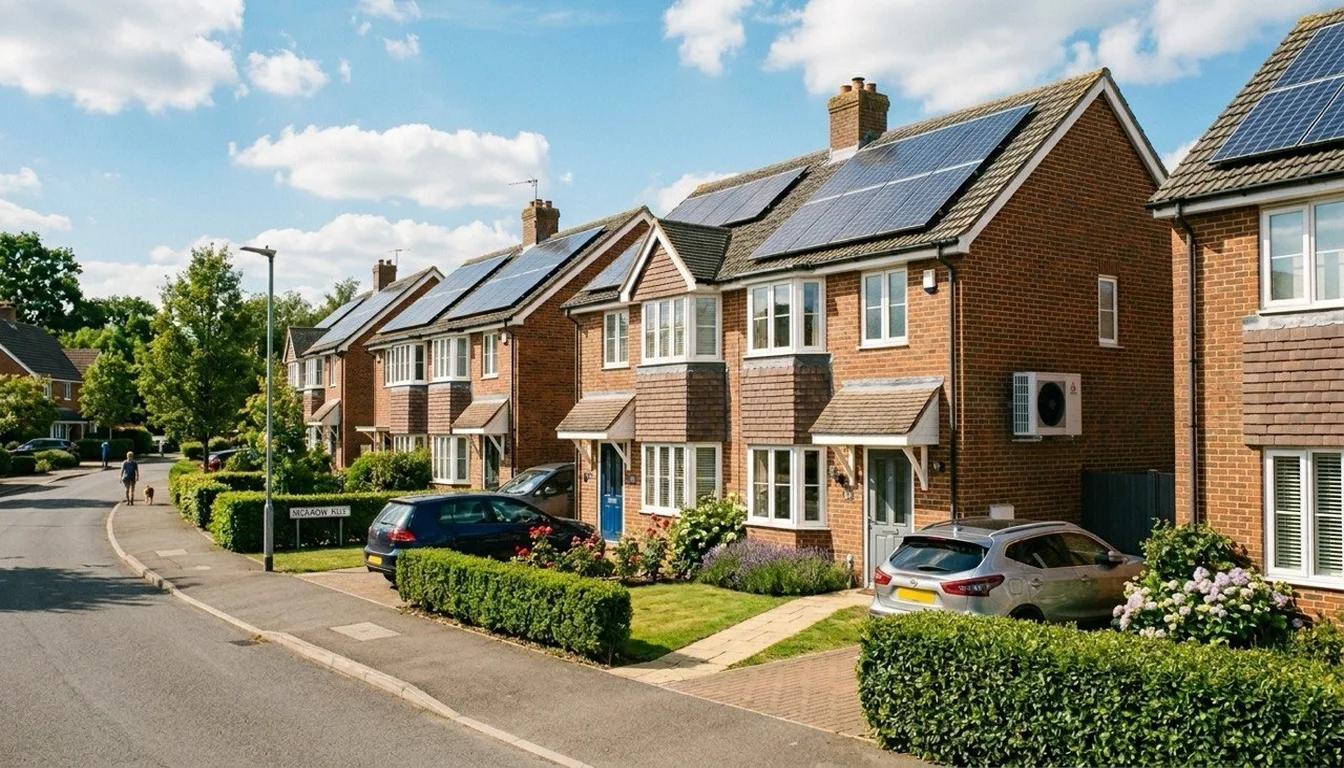
I was talking to an estate agent last month who told me something that stuck with me: "Nobody asks about the EPC rating before viewing. They ask about bedrooms, parking, and the garden." And he is right - in my experience, energy performance is the last thing most buyers think about. That single oversight can cost thousands in annual running costs and tens of thousands in unexpected retrofit work.
TL;DR
- EPC ratings directly affect annual energy costs - Band A runs around £300/year, Band G around £2,400/year
- Red flags in photos: single-glazed windows, boilers over 25 years old, solid walls without insulation
- Retrofit costs start at £5,000 for basic insulation and go up to £30,000 for solar and battery
- South-facing properties gain up to 40% more solar heat than north-facing ones
- Surveyors rarely assess wall insulation quality, window seal condition, or boiler efficiency
- The cheapest house on the street often costs the most to run over 10 years
Reading an EPC Before You Visit
EPC ratings run from A (most efficient) to G (least efficient). The band translates directly to expected annual energy costs. A Band A property typically costs around £300 per year to heat and power. A Band G property costs around £2,400. These are not rough estimates - the government calculates them based on the property's size, age, construction type, and installed heating system.
Every property listed for sale in England and Wales must have a valid EPC. You can look up any property's certificate for free on the GOV.UK EPC register before you even book a viewing. The certificate also includes a list of recommended improvements and their estimated impact on the rating.
Red Flags You Can Spot in Listing Photos
Before making an offer - sometimes before even visiting - you can spot energy problems in the listing photos:
- Single-glazed windows are common in pre-1980s properties. They lose heat roughly 60% faster than double glazing. Look for thin window frames without the characteristic gap between panes.
- Old boilers over 25 years old run about 25% less efficiently than modern condensing models. Replacing one typically cuts annual heating costs by £250-500. Estate agents rarely mention boiler age, but you can often spot an old wall-mounted boiler in kitchen photos.
- Solid walls without cavity wall insulation lose about 25% of a home's heat through the walls alone. Properties built before 1920 almost always have solid walls. You can often tell from the brickwork pattern - solid walls show alternating long and short bricks.
Estimating Retrofit Costs Before You Offer
If you are considering a property that needs energy upgrades, get ballpark figures for the essential work before making an offer. Factor these into your bid:
- Basic insulation (cavity wall + loft): £5,000-7,000
- Modern double glazing throughout: £2,500-4,500
- New condensing boiler: £2,500-4,000
- Solar panels with battery storage: £12,000-30,000
These are 2026 UK averages. Actual costs vary by region, property size, and access difficulty. But they give you a realistic starting point for adjusting your offer price.
Orientation Matters More Than You Think
Property orientation has a significant impact on energy costs that most buyers overlook entirely:
- South-facing rooms gain up to 40% more solar heat in winter compared to north-facing rooms. This passive solar gain reduces heating demand without any equipment.
- East-facing rooms get morning sun, which helps warm the house early when heating demand is highest.
- North-facing rooms need 30-40% more artificial lighting in winter months, adding to electricity costs.
If the main living spaces face north and the property has limited south-facing glazing, expect higher heating and lighting bills year-round. Ask the estate agent for orientation details, or check on Google Maps before visiting.
What Your Surveyor Will Not Tell You
Standard RICS home surveys are not energy audits. Surveyors often miss critical energy details:
- They rarely inspect existing wall insulation. The survey typically reports what was installed during construction but does not verify whether insulation has degraded, settled, or been removed.
- Window frame condition and seal integrity are often noted as "double-glazed" without checking whether frames are draughty or seals have failed. Failed seals mean condensation between panes and reduced thermal performance.
- Boiler age and actual efficiency are usually not verified against manufacturer specifications. A surveyor might note "gas central heating" without flagging that the boiler is 30 years old and running at 65% efficiency.
If energy performance matters to you - and it should - request the EPC separately and consider commissioning an independent energy assessment alongside your standard survey.
The True Cost of the Cheapest House
Compare two otherwise identical houses on the same street. One is listed at £300,000 with a Band G rating. The other is £325,000 with a Band A rating.
- Band G house: approximately £2,400 per year in energy costs
- Band A house: approximately £300 per year in energy costs
- Annual difference: £2,100
Over a 10-year mortgage, that £2,100 annual difference adds up to £21,000 - nearly matching the £25,000 price difference. And that calculation does not include the retrofit costs needed to bring the Band G property up to a reasonable standard, which could easily add another £15,000-25,000.
The cheapest house on the street is often the most expensive house to own.
Thinking about buying?
We provide energy assessments and EPC services across Bedfordshire, Cambridgeshire, and Hertfordshire. If you want to understand a property's true energy costs before making an offer, we can help.
Get in Touch