Listen to this article
TL;DR
- MEES regulations require new builds to achieve a minimum EPC rating of C before occupation.
- Compliance is measured through SAP calculations during the design phase, not post-construction.
- Building envelope improvements deliver the highest EPC rating gain per pound spent.
- Air source heat pumps can provide 10-15% EPC improvement over conventional boilers.
- Failing to integrate energy efficiency at schematic design increases retrofit costs by 3-5x.
- Achieving MEES compliance typically adds only 0.8-3.2% to construction costs.
- Future-proof projects by specifying additional insulation capacity beyond current MEES requirements.
- Smart energy monitoring systems maintain optimal performance post-occupancy.
Understanding MEES Requirements
MEES regulations require new buildings to achieve an EPC rating of C before occupation. This is measured through SAP calculations during the design phase, not post-construction. The standard applies to all new builds regardless of size or purpose, making it a fundamental part of the planning process. The C rating must be maintained throughout the building's lifecycle, not just at the time of completion.
Cost-Effective Implementation Strategies
Meeting MEES does not require excessive spending. The most impactful, cost-efficient measures include:
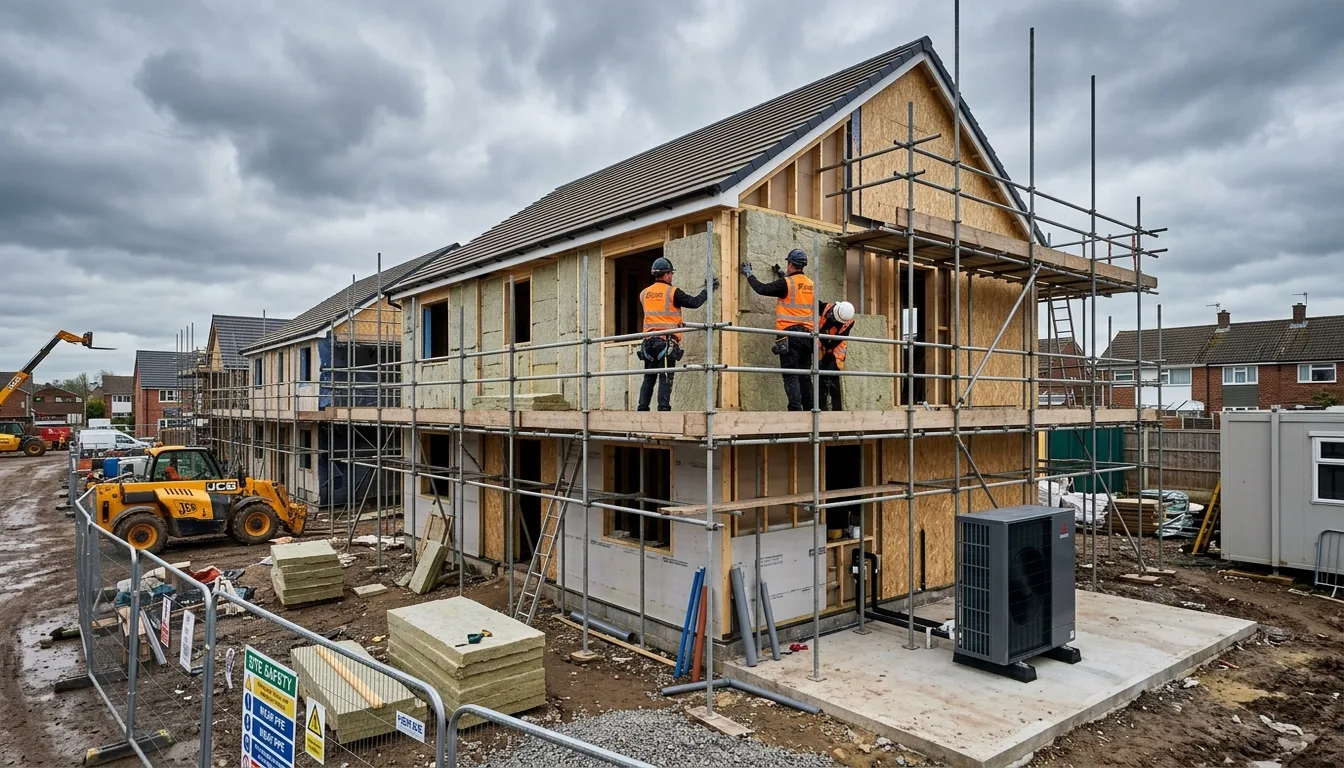
- Building envelope improvements: Enhanced insulation in walls, roofs and floors prevents heat loss. Focusing on the building envelope delivers the highest EPC rating improvement per pound spent.
- High-efficiency heating systems: Air source heat pumps outperform standard gas boilers in EPC contribution. Their inclusion can provide 10-15% EPC improvement versus conventional systems.
- Strategic window placement: Maximising natural light through southern-facing glazing reduces lighting energy demand by up to 25% in optimal designs.
Common Pitfalls to Avoid
Several issues commonly arise during MEES implementation:
- Design phase oversights: Failing to integrate energy efficiency into schematic design increases retrofit costs by 3-5x.
- Material selection: Choosing standard cladding over high-performing alternatives can lower the EPC rating by 2-3 points.
- Post-construction verification: Not verifying the actual building performance through post-occupancy energy monitoring leads to unmet EPC requirements.
Future-Proofing Your Projects
As energy regulations tighten, future-proofing builds is increasingly advantageous. Consider:
- Modular insulation: Specifying additional insulation capacity beyond MEES requirements for future compliance upgrades.
- Smart energy monitoring: Integrating building management systems to maintain optimal performance post-occupancy.
- Renewable capacity: Building in space for potential solar panel installation during the next planning phase.
MEES compliance represents both a regulatory requirement and a strategic opportunity to enhance building quality, reduce long-term operational costs, and meet rising market expectations for energy efficiency. By integrating these strategies during design, developers can achieve the required EPC rating without significant cost premiums.
References and Sources
Last updated: 2 June 2026