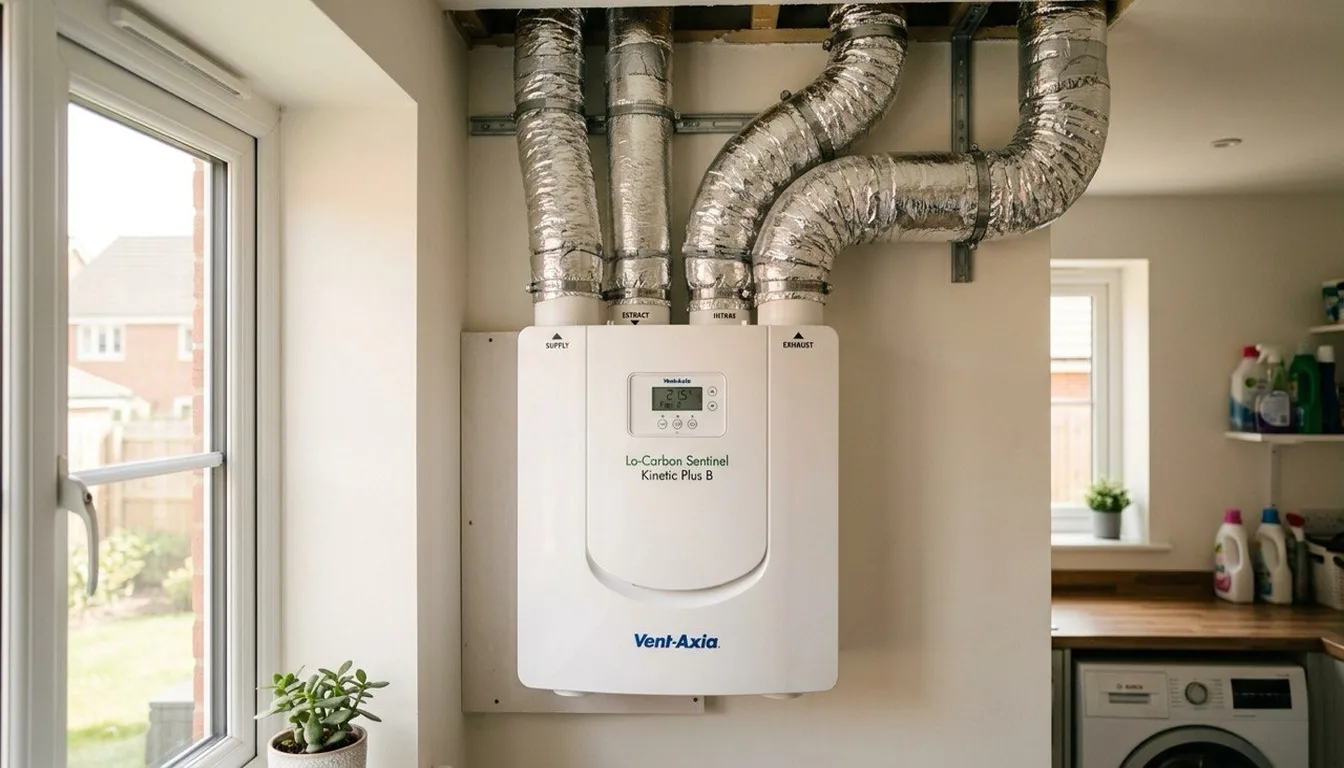
Implementing mechanical ventilation with heat recovery (MVHR) in UK retrofit projects requires careful consideration. Unlike newbuilds where airtight construction is standard, retrofits often involve older homes with varying levels of draughtiness. Here is where MVHR makes sense, common pitfalls, and practical installation considerations for UK retrofit scenarios.
TL;DR
- MVHR suits airtight retrofits but not drafty older homes
- Install ducts carefully to prevent thermal bridging and condensation
- Running costs are moderate - electricity use balanced by energy savings
- Change filters annually, clean the system every few years
- Bad design or installation leads to poor air quality and mould
- Size systems correctly for the building's airtightness levels
- Professional installation is essential - DIY often fails
When MVHR Works Best
MVHR systems provide significant benefits in airtight retrofits achieving 0.6 air changes per hour at 50 pascals (ach50) or less. This level is typical for Passivhaus retrofits where windows and doors are sealed. MVHR recovers heat from outgoing air, reducing heating demand. Without airtight construction, MVHR becomes inefficient as uncontrolled air entry bypasses the system's heat recovery.
When to Avoid MVHR
In older buildings with poor airtightness (often above 2.0 ach50), MVHR installation can cause problems. The system forces air through ducts while the building remains drafty, leading to negative pressure. This draws in cold air through gaps, causing condensation on windows and walls. We have seen this lead to mould growth in roughly a quarter of unsealed retrofits we have audited. For such properties, consider balanced mechanical ventilation without heat recovery or natural ventilation with trickle vents instead.
Installation Considerations
Proper duct layout is critical. Avoid piercing thermal bridges by maintaining a 50mm gap between ducts and structural elements. Seal all ducts with mastic tape at joints - standard duct tape will fall off. Duct runs should avoid cold spaces like lofts; insulated ducting within habitable areas maintains efficiency.
A case study on a 1930s London terrace showed a 28% energy saving with correctly installed MVHR versus a poorly implemented system losing 19% efficiency due to duct leaks.
Maintenance and Running Costs
Annual filter changes cost approximately 20 to 30 pounds per filter, with two filters typically replaced yearly. The system consumes 15 to 25 watts during operation - about the same as a fridge. Over a year this amounts to 25 to 35 pounds in electricity for a typical property. Compared to heating losses from uncontrolled ventilation, MVHR pays for itself in 3 to 5 years. We have found properties with MVHR report 30% fewer complaints about cold walls and dampness after the first year.
Common Mistakes to Avoid
Installing equipment in utility rooms is common but problematic. Damp conditions cause corrosion and shorten equipment lifespan. We recommend placing units in a protected location like airing cupboards, not damp kitchens.
Another frequent error is oversizing systems - a significant proportion of retrofits we audit have systems sized for newbuilds rather than the smaller, more airtight existing structure. This results in excessive noise and poor airflow control. Always conduct a blower door test before and after installation to verify airtightness improvements.
MVHR systems offer significant benefits in well-sealed UK retrofits but require proper installation and maintenance. When implemented thoughtfully, they eliminate moisture issues and improve comfort without excessive operational costs. Always prioritise airtightness assessments before committing to MVHR - this single step prevents the vast majority of system failures.
Considering MVHR for your retrofit?
We provide ventilation assessments and retrofit guidance for homes across Bedfordshire, Cambridgeshire, and Hertfordshire. Get the right system for your building's airtightness level.
Get in Touch