TL;DR
- RdSAP 10 replaces the methodology behind every domestic EPC in England and Wales
- The primary metric shifts away from energy cost toward carbon emissions and fabric performance
- Heat pumps and solar PV score significantly better under the new system
- Gas-heated properties may see ratings fall slightly at band boundaries
- Existing valid EPCs remain legally valid until their expiry - you are not required to renew
- Properties with electric heating that previously scored poorly are likely to benefit most
If you have looked into EPC assessments recently, you may have come across references to RdSAP 10 - the updated methodology replacing the existing calculation behind every domestic Energy Performance Certificate in England and Wales. The change is significant enough that some properties will receive materially different ratings, and it has real implications for landlords managing MEES compliance and homeowners planning improvement works.
This article explains what RdSAP 10 actually changes and what it means in practice - without the technical jargon.
What RdSAP Actually Is
The Standard Assessment Procedure (SAP) is the government-approved methodology for calculating the energy performance of a home. Every EPC issued in England, Scotland and Wales is underpinned by a SAP calculation - it determines the A to G rating on the certificate.
Reduced Data SAP (RdSAP) is a simplified version designed for existing properties, where full construction data is impractical to obtain. Rather than requiring detailed specifications for every element of the building, RdSAP uses conventions and default assumptions based on construction age, property type, and what the assessor can observe on site.
The version currently in use - RdSAP 9.94 - has been the standard since 2012. RdSAP 10 is the first major revision in over a decade.
What Is Changing
A new primary metric. Under the existing system, the EPC rating is primarily driven by energy cost per square metre. This means gas-heated properties tend to score better than equivalent electrically-heated ones, simply because gas is cheaper per unit of energy - regardless of the building's actual thermal performance. RdSAP 10 shifts the primary metric toward carbon emissions and fabric performance, which changes relative ratings significantly.
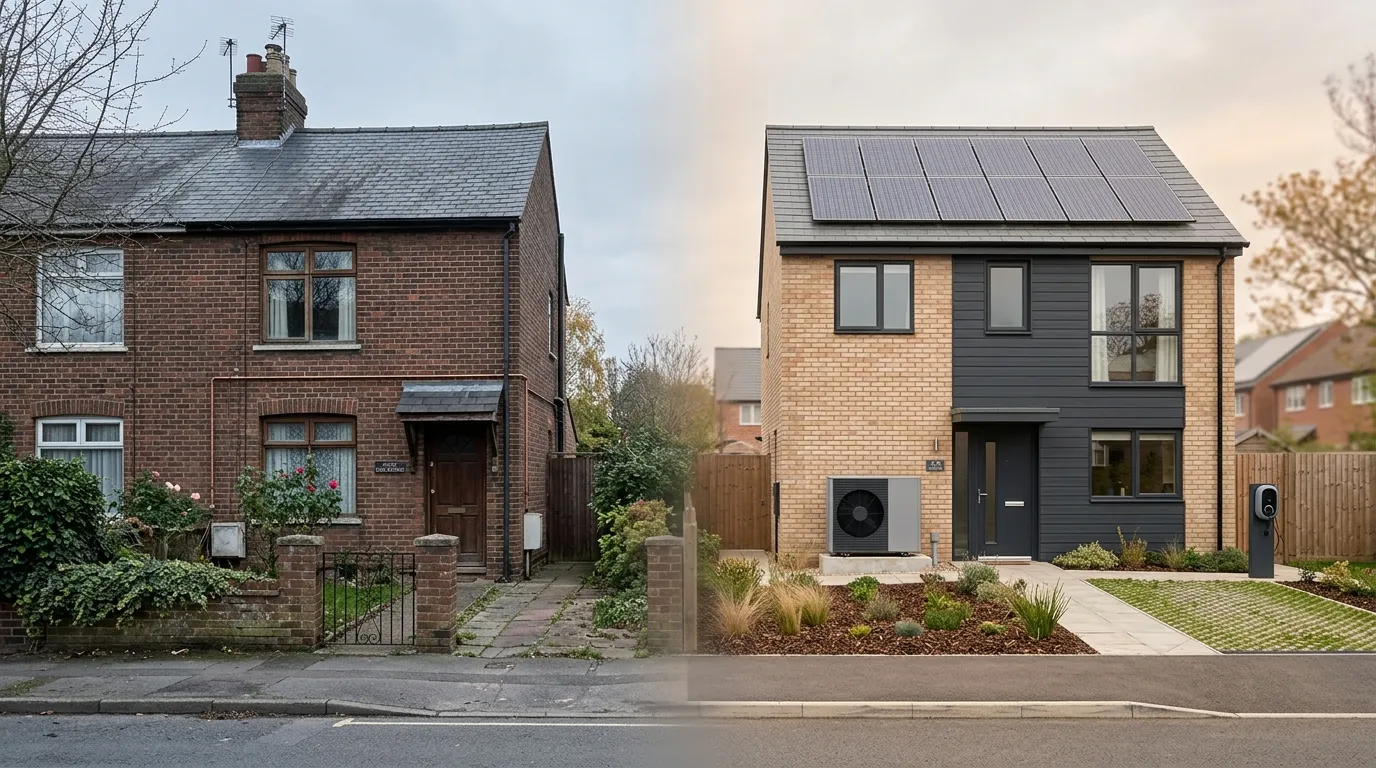
Heat pumps and solar PV score better. Properties with heat pumps or solar panels - currently penalised by the cost metric - will score considerably better under the new system. The SAP calculation will more accurately reflect the low-carbon benefit of these technologies.
More detailed fabric assessment. RdSAP 10 requires assessors to gather more precise data about walls, floors and roofs. Default assumptions for properties identified only by age band become more specific, meaning some properties that previously benefited from generous defaults may see ratings adjust downward.
Updated insulation assumptions. The age-based defaults for loft, cavity wall and floor insulation have been revised to better reflect what is actually installed in the housing stock.
Two Cases Where the Change Matters
The first involves a mid-terrace property in Ely, Cambridgeshire - a 1960s local authority build that was converted to electric storage heating in the 1990s when the original gas supply was removed during estate renovation works. Under RdSAP 9.94, the property scores E-44, partly because the SAP cost metric penalises electric heating heavily. The landlord has been frustrated - the property is well insulated, has 300mm of loft insulation, and double glazing throughout, but the rating does not reflect this.
Under RdSAP 10, the shift away from cost-based metrics toward fabric performance means this property type is expected to score materially better. Properties with solid thermal performance but electric heating have been disproportionately penalised under the existing methodology, and the revision addresses this directly.
The second case is a 2018-built detached house in Letchworth, Hertfordshire, where the owners installed a 4kWp solar array and an air source heat pump in 2023, expecting a significant EPC improvement. Under RdSAP 9.94, the result was C-72 - better than before, but the owners felt the improvement they had made was not being properly credited. Under RdSAP 10, the treatment of heat pumps and solar generation is more favourable, and a reassessment is likely to push the property toward the upper end of Band C or into Band B.
Who Is Most Affected
Electrically heated properties. If your property uses storage heaters or direct electric panel heaters, the shift away from cost-based metrics is likely to improve your rating. Properties in rural Cambridgeshire and parts of Hertfordshire that were never connected to the gas network fall into this category.
Properties with heat pumps or solar PV. Expect a meaningful rating improvement when reassessed under the new methodology.
Older properties relying on age-band defaults. Properties where the assessor used conservative defaults - common in pre-1945 stock across the region - may see adjustments in either direction depending on the specific construction.
Properties near band boundaries. If your rental property is currently sitting at E-42 or E-45 under RdSAP 9.94, a reassessment under RdSAP 10 could move it either way. Worth understanding before the methodology change beds in.
Do You Need to Get a New EPC?
Not automatically. A valid EPC issued under RdSAP 9.94 remains legally valid until its expiry date, regardless of the methodology change. You are not required to obtain a new certificate simply because the calculation method has been updated.
However, a new assessment is worth considering if:
- Your current certificate is within two years of expiry anyway
- The property has had significant improvements since the last assessment
- Your current rating sits near a compliance boundary - particularly E/F - and you want to understand your true position under the new methodology
- You have installed a heat pump or solar panels and the current certificate does not reflect them
Practical Steps
Check the lodgement date of your current EPC at epcregister.com. If it was issued more than eight years ago, plan to commission a new one in the next 12 to 18 months - and when you do, it will be assessed under RdSAP 10.
If you are planning improvements - insulation, a new heating system, solar - commission a new EPC after the work is complete rather than before. The certificate will then reflect the improvements accurately.
We carry out EPC assessments across Bedfordshire, Cambridgeshire and Hertfordshire. If you are unsure how RdSAP 10 affects your specific property, contact us before committing to any improvement works.
---
Need an EPC assessment?
We provide EPC assessments across Bedfordshire, Cambridgeshire and Hertfordshire. Fast turnaround, accurate results.
Get in Touch