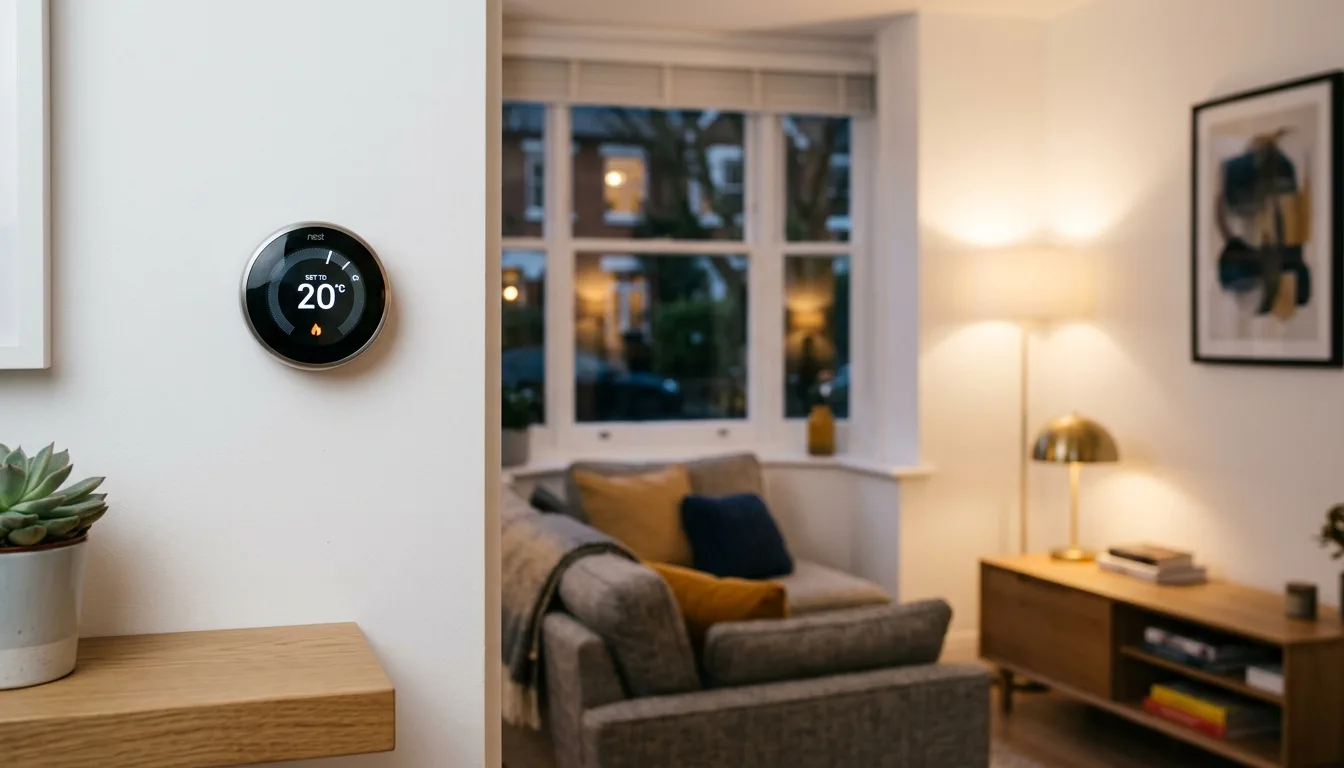
TL;DR
- Smart thermostats can reduce heating costs by 5–15% compared to traditional programmers
- Thermostatic radiator valves (TRVs) provide zonal control but benefits vary based on installation
- Zoning systems work best in larger homes with multiple zones and good insulation
- Integration with heat pumps offers significant savings over traditional gas boilers
- OpenTherm communication reduces inefficiencies in modern boiler systems
- Real-world savings vary based on user habits, home type, and installation quality
- Basic smart controls often offer better value than expensive full automation systems
Modern UK homes are increasingly equipped with smart heating controls, from simple programmable thermostats to complex smart home integration systems. At their core, these systems promise energy savings and improved convenience. However, the reality for many households is more nuanced – especially when it comes to actual money-saving benefits.
The Smart Heating Revolution in UK Homes
The transition from traditional boiler programmers and simple thermostats to smart heating controls has been significant over the past decade. Leading brands like Hive, Nest, tado, and others have made these systems more accessible than ever before.
According to the Energy Saving Trust, homes with smart thermostats use between 5% and 15% less energy for heating compared to traditional methods. This range reflects how different users interact with the technology and how well their systems are installed and optimised.
Popular Smart Heating Solutions
- Smart thermostats: Devices like Nest, Hive, and tado offer scheduling, remote control via smartphone, and learning capabilities.
- Thermostatic radiator valves (TRVs): Independent controls for individual radiators that allow room-specific temperature control.
- Zoning systems: Multiple thermostats in separate zones to control different areas of a home independently.
- OpenTherm integration: Communication protocol allowing precise control between boiler, controls, and heating system components.
Smart Thermostats: Beyond the Hype
Smart thermostats are perhaps the most accessible form of smart heating control for UK homeowners. They offer features such as remote access, scheduling based on occupancy patterns, learning algorithms, and home automation integration.
How Smart Thermostats Work
While basic programming can adjust temperatures at set times, smart thermostats use sensors and machine learning to understand user preferences. They can detect when you're away from home and automatically reduce heating or even shut it off entirely.
Real-World Savings
The actual savings depend on several factors:
Factors Influencing Savings
- User habits: Effective use can save up to 15%, while lazy usage might result in savings as low as 5%.
- Home size and insulation: Larger homes with good thermal performance see bigger potential savings.
- Boiler efficiency: Modern condensing boilers paired with smart controls provide better efficiency.
- Heating system type: Systems that already use OpenTherm or other smart communication protocols benefit more.
- Occupancy patterns: Homes with irregular schedules see greater benefits than those with fixed routines.
Thermostatic Radiator Valves (TRVs)
TRVs represent a cost-effective upgrade to traditional heating systems. They allow individual control of radiator temperatures in different rooms, enabling users to maintain desired comfort levels without heating unused spaces.
Benefits and Limitations of TRVs
Advantages:
- Room-specific temperature control
- Reduction in overall heating usage
- Relatively affordable to install
- Can be retrofitted without major disruption or boiler replacement
Considerations:
- Performance depends heavily on proper installation and boiler compatibility
- May not be suitable for older or poorly insulated systems
- Need regular calibration to maintain optimal performance
- Most effective when combined with smart thermostat technology
Zoning Systems: When One Size Doesn't Fit All
Zoning involves installing separate controls for different areas of a home, allowing for better temperature management. This is particularly valuable in multi-story households or homes with varying usage patterns.
Zoning Strategies and Integration
Effective zoning requires careful consideration of the home's layout, occupancy patterns, and heating demands:
Common Zoning Approaches
- Room-by-room zones: Separate control for living areas, bedrooms, and other key spaces
- Floor-level zoning: Control heating based on floor usage patterns
- Occupancy-based zones: Different controls for occupied vs. unoccupied areas
The most advanced systems feature integration with smart thermostats, allowing dynamic zone management based on real-time occupancy and weather conditions.
OpenTherm vs On/Off Boiler Control
Communication protocols between boiler controls and heating systems determine how efficiently energy is utilised. OpenTherm represents a significant improvement over traditional on/off control methods.
Comparison of Control Methods
| Feature | OpenTherm | On/Off Control |
| Modulation Control | Continuous 20%-100% modulation | On/Off only |
| Efficiency | Higher – reduced heat cycling | Lower – inefficient on/off cycles |
| Cost Savings | Approximately 5% additional savings | No additional savings |
| System Compatibility | Modern condensing boilers | All boiler types |
Integration with Heat Pumps
Heat pumps are increasingly common in UK homes, and their performance is significantly enhanced when integrated with smart heating controls. These systems have different operational characteristics compared to traditional gas boilers.
Why Smart Controls Are Essential with Heat Pumps
- Optimal operation: Smart controls adjust pump operation for maximum efficiency, even when heating requirements are low
- Smart scheduling: Allows the heat pump to heat during off-peak hours when electricity is cheaper
- Battery integration: When paired with solar panels or battery storage, allows for intelligent energy management
- Reduced wear: Proper control prevents frequent cycling that can damage a heat pump system
The Energy Saving Trust recommends that smart controls provide a 10-15% improvement in overall heat pump efficiency when properly implemented within a well-insulated home. This is particularly significant as homes become increasingly energy-efficient and demand for heating becomes more variable.
Real-World Savings Data
Empirical evidence from energy audits and household monitoring provides insight into how much users actually save. In a detailed analysis by Which?, homes with smart thermostats showed an average reduction of 8% in heating costs over three months.
Saving Patterns from Case Studies
Real-world data collected across different household types reveals important patterns:
Smart Heating Savings by Home Type
| Home Type | Typical Savings | Notes |
| Terraced House (2010s) | 8-12% | Good insulation, typical occupancy patterns |
| Detached Home (1980s) | 10-15% | Modern boiler, good thermal performance |
| Converted Flat (1960s) | 6-8% | Less ideal thermal performance |
Common Setup Mistakes
Implementation errors can negate the benefits of smart heating systems, often by as much as 30% in some cases. These mistakes typically include installation flaws and poor user habits.
Avoiding Common Pitfalls
- Incorrect placement: Thermostats should be away from draughts, heat sources, or direct sunlight
- Misunderstanding features: Users who don't utilise scheduling or leave temperature settings at extremes may see minimal benefits
- Ignoring boiler compatibility: Not checking if a system is compatible with smart controls can lead to sub-optimal performance
- Over-reliance on automation: Not understanding when manual control is needed, such as for special occasions or unusual weather conditions
- Inappropriate scheduling: Setting too rigid or incorrect schedules without consideration of variable household patterns
When Smart Controls Make Sense vs When They Don't
The ROI of smart heating controls varies significantly based on several factors:
When You Should Invest
- Modern homes with good insulation: Most efficient when combined with other efficiency upgrades
- Occupancy patterns vary significantly: Homes where not all areas are used regularly benefit the most
- Heat pump installation: Critical for optimal heat pump performance
- Existing boiler is inefficient: Smart controls can improve what would otherwise be poor efficiency
When They May Not Be Worth It
- Very small homes: May not provide the cost benefits for the investment
- Homes with inconsistent schedules: Users who rarely program their systems see minimal benefit
- Heating systems already very efficient: Low-efficiency boilers may see modest improvements at best
- Existing boiler replacement: In some cases, a new system upgrade without smart control may offer better value
Cost-Benefit Analysis
Investment costs for smart heating controls varies widely depending on the system and installation requirements:
Typical Investment Costs
- Basic smart thermostat: £100-£200
- Advanced smart thermostat with zone control: £250-£400
- Thermostatic radiator valves: £30-£60 per valve
- Complete smart heating system installation: £500-£1,500
Based on industry data and analysis by the Energy Saving Trust, most UK households can expect a return on investment between 2-4 years with basic systems and up to 6-8 years for premium systems, assuming average energy prices and usage patterns.
Conclusion
Smart heating controls provide genuine opportunities for energy savings in UK homes, but the extent depends on home characteristics, user behaviour, and installation quality. For households with modern systems and good insulation, smart controls typically deliver 5-15% savings with a reasonable ROI.
The key is to approach these systems thoughtfully. Understanding that basic improvements like properly calibrated TRVs offer solid benefits without complexity can help homeowners make informed decisions about investing in full automation. For those with heat pumps or complex heating requirements, sophisticated controls are valuable – but they must be installed and used correctly to provide real value.
Need help with your home's heating system?
We can assess if smart controls are suitable for your home and identify opportunities to maximise your energy savings.
Get in Touch