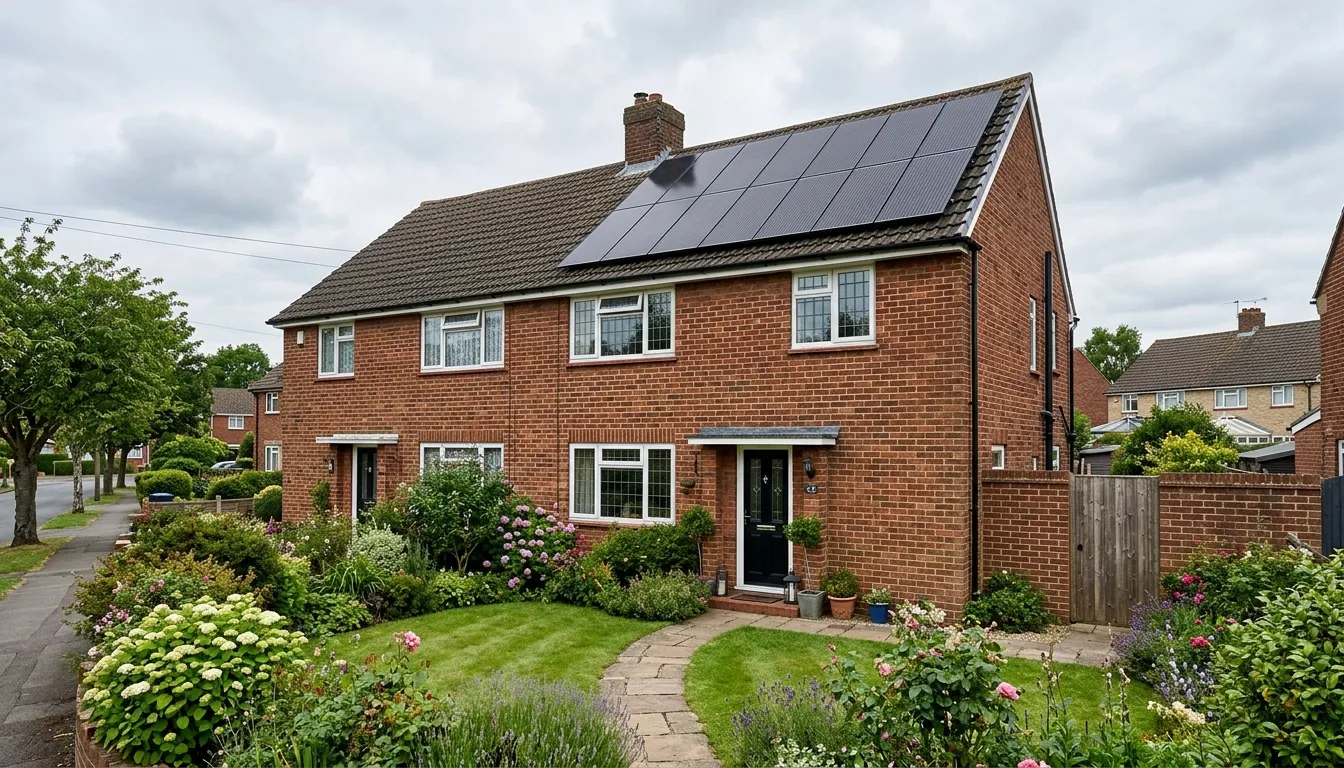
Solar panel salespeople love quoting 5-7 year payback periods and near-total energy independence. The UK reality is different. Here are the actual numbers, verified against Energy Saving Trust and Ofgem data.
The short version
- Real payback period: 10-15 years, not the 5-7 years installers quote.
- UK average generation: 800-1,000 kWh per kWp in southern England. Northern areas get less.
- Battery storage adds 6-10 years to payback at current prices. Worth it for some, not most.
- Feed-in tariffs ended in 2019. SEG export rates sit at 5-10p/kWh. Self-consumption is the real benefit now.
- Solar works best on south-facing roofs with high daytime energy use and 10+ year ownership plans.
- East-west roofs produce 20-30% less. North-facing delivers under 60% of a south-facing system.
- Conservation areas need planning permission (8-12 weeks), and listed buildings are often refused.
The Real Payback Period
Installers routinely claim 5-7 year payback. The actual figure for most UK households is 10-15 years. Why the gap?
A typical 4kW residential system costs between £6,000 and £9,000 installed. That system will generate around 3,400 kWh per year in southern England (about 850 kWh per kWp). In Scotland and northern England, expect 750-800 kWh per kWp.
If you use half the electricity yourself (saving roughly 34p/kWh on grid import) and export the rest at SEG rates (around 7p/kWh), your annual saving comes to about £700. At a £7,500 install cost, that's a payback of just under 11 years. Not terrible, but a long way from the sales pitch.
The installers' 5-7 year claims typically assume you'll use nearly all the solar electricity yourself, that energy prices will keep rising, and that the system performs at its peak rating year-round. None of those assumptions hold up for most households.
Generation vs. Claims
Energy Saving Trust data shows that actual generation varies by up to 30% depending on weather, roof angle, shading, and location. The industry-standard claim of 1,200+ kWh per kWp per year doesn't match UK conditions outside a few unusually sunny years in the south.
Real-world monitoring data from the MCS (Microgeneration Certification Scheme) shows most 4kW systems in England produce 3,200-3,800 kWh annually. Systems on east or west-facing roofs produce 20-30% less than south-facing ones. North-facing installations generate under 60% of a south-facing system's output and rarely make financial sense.
Panel degradation also matters. Most manufacturers guarantee 80-85% output at 25 years, meaning you lose roughly 0.5-0.7% of generation capacity each year. Your year-20 output will be noticeably lower than year one.
Battery Storage: Worth It?
Home batteries add £2,000-£5,000 to the system cost, depending on capacity. The maths depends entirely on how much solar you currently export versus use.
A typical 5kWh battery lets you store daytime solar generation for evening use. If your household uses most electricity in the evening (common for working families), a battery can shift meaningful amounts of energy from export (7p/kWh) to self-consumption (saving 34p/kWh). That's a 27p swing per kWh stored.
At one full cycle per day, a 5kWh battery saves roughly £490 per year. Against a £3,500 purchase price, that's about a 7-year payback on the battery alone. But battery degradation, reduced winter cycling, and the occasional day you don't fill it push the realistic payback closer to 9-12 years.
For households already using most of their solar electricity during the day (retired people, home workers), a battery adds little value. For families out during the day, it can make solar considerably more useful.
The SEG Reality
The old Feed-in Tariff scheme closed to new applicants in March 2019. It guaranteed generous payments for every kWh generated and exported. Those days are gone.
The Smart Export Guarantee (SEG) replaced it, but the rates are far lower. Most energy suppliers offer between 5p and 10p per kWh for exported electricity. Ofgem data from early 2026 shows the average SEG payment sitting around 7p/kWh. Some suppliers offer time-of-use tariffs that pay more for exports during peak hours, but these require a smart meter and careful management.
The practical takeaway: solar in 2026 is a bill-reduction tool, not an income generator. The more of your own solar electricity you use directly, the better the economics work.
When Solar Makes Sense
- South-facing roof with minimal shading from trees, buildings, or chimneys
- High daytime electricity use (home office, electric vehicle charging, heat pump)
- Planning to stay 10+ years to see the full payback
- Annual electricity bills above £1,200 where meaningful savings are possible
- New build or major renovation where installation costs can be rolled into the project
When to Think Twice
- North-facing or heavily shaded roofs where generation will be poor
- Low electricity usage (under £800/year in bills)
- Moving within 5 years as you won't recoup the investment. Solar can add value to a property sale, but not reliably enough to count on.
- Listed buildings or conservation areas where planning permission may be refused
- Roof in poor condition as you'll need to remove panels for roof repairs later
Roof Direction Matters More Than You Think
This connects to property choice. If you're buying a house and have any interest in solar, pay attention to which way the roof faces.
South-facing is the gold standard. East-west split roofs (panels on both sides) produce 20-30% less overall but spread generation more evenly across the day, which can actually suit some households better. South-east and south-west orientations lose only about 5-10% compared to due south.
North-facing is essentially a non-starter. You'll generate under 60% of what a south-facing system produces, and the payback period stretches beyond the likely lifespan of the panels. If you have a north-facing roof only, spend the money on insulation instead. You'll get a better return.
Planning Permission
Most residential solar installations fall under permitted development rights and don't need planning permission. But there are exceptions.
In conservation areas, panels visible from the road typically require a planning application. The same applies to listed buildings, where any external alteration needs listed building consent. The process takes 8-12 weeks, and refusal rates for listed buildings are high because local planning authorities prioritise preserving the building's character.
If you're buying a property in a conservation area and planning to install solar, check with the local planning authority before committing. A pre-application enquiry costs around £50-£100 and gives you a realistic idea of whether the council will approve it.
Ground-mounted solar arrays over a certain size and any installation on a flat roof that sits above the highest part of the roof (excluding the chimney) also need permission.
The Bottom Line
Solar panels in the UK are a solid long-term investment for the right property. They're not a quick win, and they're not right for everyone. The key is matching the system to your roof, your usage patterns, and your timeline.
Always get at least three quotes from MCS-certified installers. Ask for generation estimates specific to your roof angle and orientation, not generic national averages. And check the Energy Saving Trust's solar energy calculator for an independent estimate before signing anything.
Thinking about solar?
We can help you understand how solar fits with your property's overall energy efficiency. An EPC assessment is a good starting point, covering insulation, heating, and where solar sits in the priority order.
Get in Touch