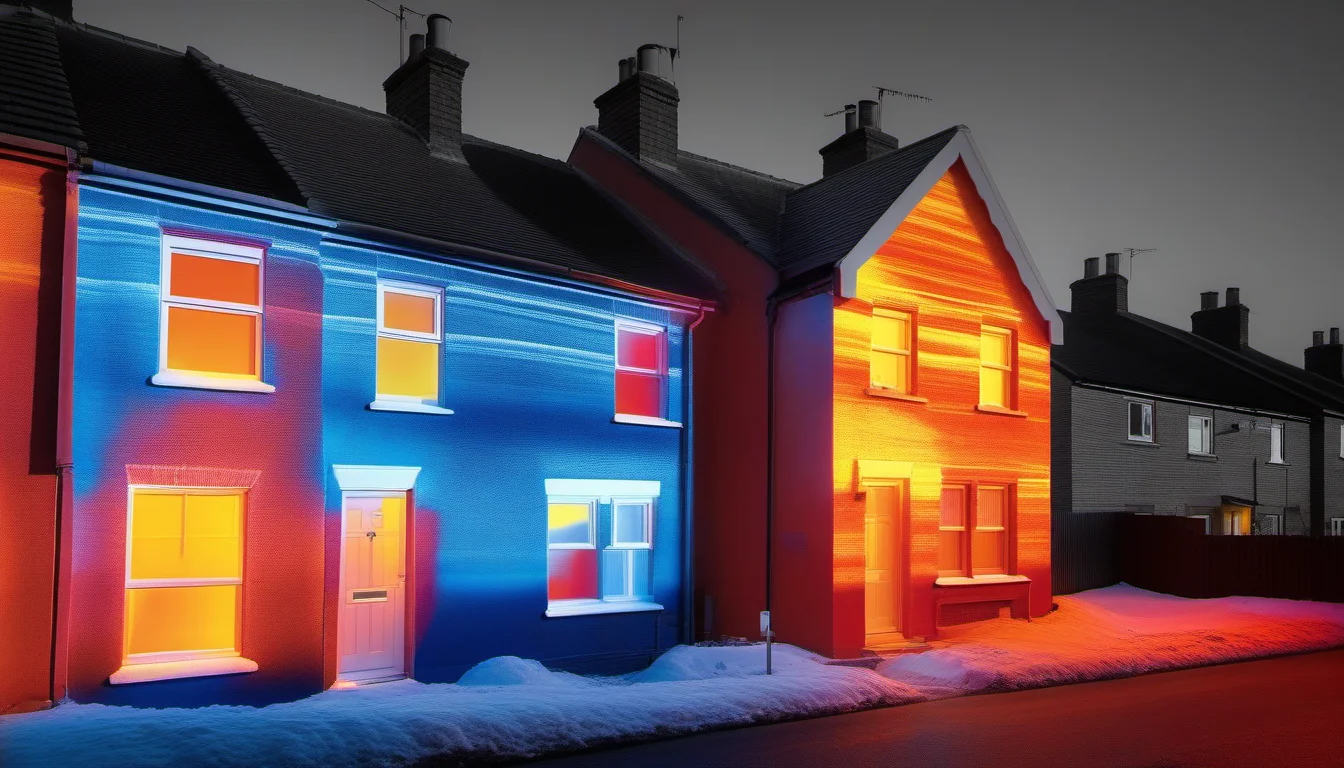
TL;DR
- Thermal imaging detects heat loss points invisible to the eye in UK buildings
- Best conducted during winter heating season when temperature contrasts are highest
- Reveals insulation gaps, cold bridges, and moisture issues
- Typical cost: £200–£500 for a standard property survey
- Not a standalone solution - needs cross-referencing with physical inspection
- Shows where energy savings can be most effectively targeted
- Cannot see through solid walls - must be performed from accessible surfaces
- Most effective when combined with air tightness testing
Thermal imaging surveys have become a standard tool in energy efficiency assessments for UK buildings. Used by professionals, they reveal hidden heat loss patterns that would otherwise remain undetected. This guide explains when and how to use these surveys properly.
What thermal imaging shows
When performed correctly, thermal imaging identifies patterns showing where heat escapes from a building. This means spotting:
- Insulation gaps in walls, attics, or around windows
- Cold bridges where heat escapes through structural elements like beams or concrete
- Moisture intrusion that compromises insulation effectiveness
- Missing cavity wall insulation or incorrectly installed materials
When to use it
A thermal imaging survey makes most sense when:
- You're experiencing high heating bills despite recent insulation work
- You notice cold spots on interior walls during winter
- Recommending retrofit work to a client or property owner
- Following an energy audit that identified potential issues
Most importantly, conduct surveys during the coldest months when internal heating is running. Temperature differentials between interior and exterior maximize visibility of heat loss patterns.
Cost versus value
A typical thermal imaging survey for a standard UK terraced house costs between £200 and £500. This is relatively modest considering:
- It targets specific areas needing remediation rather than guessing
- Allows precise installation of insulation or sealing work
- Avoids unnecessary whole-property remediation
- Provides visual evidence for property sales or energy certificates
The value comes from directing resources to where they'll deliver the greatest energy savings. For homeowners, this often represents a clear ROI within a few years.
Important limitations
Users should understand the technology's limits:
- Cannot detect heat loss through solid internal walls
- Doesn't measure exact heat loss values (only shows patterns)
- Requires a temperature difference of at least 5°C for clear imaging
- Surface contamination like wallpaper obstructs readings
- Cannot see insulation performance behind windows or doors
For accurate diagnosis, thermal imaging must be supplemented with manual inspections and other tools like blower door tests.
Best practice approach
For a survey to be effective, follow these steps:
- Conduct during winter months with central heating active
- Ensure interior surfaces are dry and unobstructed
- Use the camera at multiple angles to capture full wall surfaces
- Document findings with reference photos
- Correlate thermal patterns with property construction details
Do not rely solely on the thermal pattern. Physically verify findings where possible - especially for potential moisture problems.
Sources
Need a thermal imaging survey?
We provide professional thermal imaging surveys across Bedfordshire, Cambridgeshire and Hertfordshire.
Get a Free Assessment