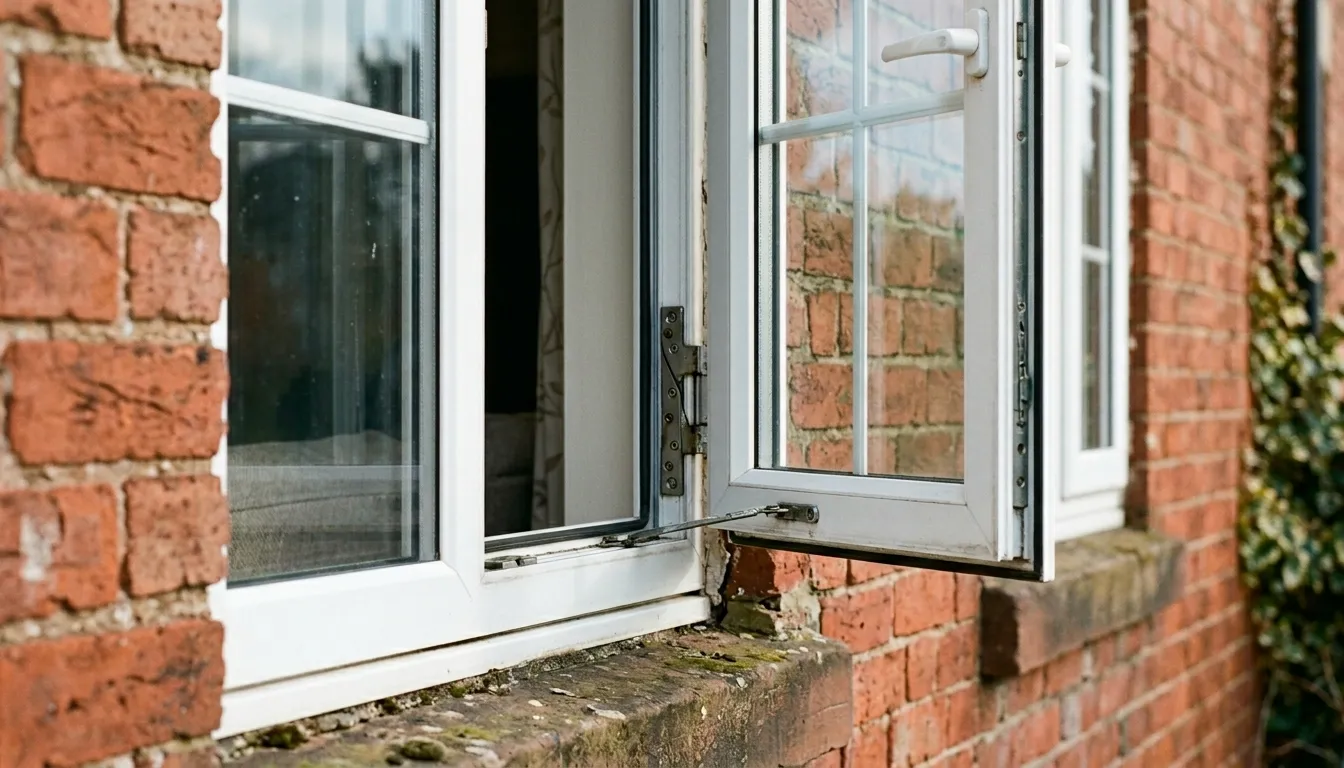
A friend in St Neots opened his upstairs office window last week. As it swung outward, something gave way in the top hinge. The entire window started falling out of the frame. He caught it. His cat was sitting directly below on the ground.
He was lucky. But the story stuck with me, because the problem he described is one I see constantly when assessing homes across Bedfordshire and Cambridgeshire. Not the dramatic near-miss - that is rare. The quieter, more expensive problem: UK windows that do not seal properly and leak heat all winter long.
A peculiarly British design choice
Most UK homes have outward-opening casement windows. It is what we build. It is what we are used to. But if you have spent any time in Continental Europe, or really anywhere else in the world, you will have noticed that almost nobody else does this.
German, Scandinavian, and most Central European homes use tilt-and-turn windows that open inward. The engineering reason is simple: when a window opens inward, wind pressure pushes it tighter against the seal. When it opens outward, wind tries to pull it open. That is why outward-opening windows need friction hinges and latches strong enough to resist wind load - and why those hinges wear out, sometimes with alarming consequences.
This is not about blaming anyone for the way British homes have traditionally been built. Outward-opening casements have advantages - they do not intrude into the room, and they shed rain well. But when it comes to airtightness and long-term reliability, the design creates problems that homeowners end up paying for in draughts and heat loss.
The real issue is the seal, not the glass
When people think about window efficiency, they think about double or triple glazing. The glass matters, certainly. But in my experience, the biggest source of heat loss around windows is not the glass - it is the seal between the window frame and the wall, and the seal between the opening casement and the fixed frame.
Where heat escapes around windows
- Perimeter seal - the gap between the window frame and the masonry. Often filled with expanding foam and then forgotten. Over time the foam degrades, shrinks, or was never applied properly in the first place.
- Casement seal - the rubber or brush strip where the opening section meets the fixed frame. On outward-opening windows, years of wind stress and UV exposure degrade these seals faster than on inward-opening designs.
- Hinge compression - as friction hinges wear, the casement no longer closes as tightly against the frame. The gap may be invisible, but cold air finds it.
- Sill junction - the bottom of the frame where it meets the internal and external sill. Water damage and thermal movement create gaps here that are easy to miss.
I have assessed homes with brand new double-glazed units that still had significant draughts because the installer left gaps in the perimeter seal. The glass was fine. The installation let it down.
I have done this myself
During the first lockdown in 2020, I was renovating a 130-year-old terraced house in Accrington, Lancashire. The original single-glazed sash windows needed replacing. When we took them out, the gaps between the frames and the brickwork were extraordinary. Some had been packed with newspaper. Others had nothing at all - just a bead of paint on the outside hiding a 15mm gap straight through to the cavity.
We fitted new windows and insulated every millimetre of the perimeter. The difference was immediate. Not just in warmth, but in noise. The house went from hearing every car on the street to genuine quiet. That is how much air was coming through those gaps.
The point is not that the old windows were bad - they had lasted 130 years, which is more than most modern units will manage. The point is that nobody had ever properly sealed the junction between window and wall. A century of heat loss because of a few metres of missing insulation.
The scale of the problem
There are roughly 29 million homes in the UK. The English Housing Survey consistently reports that around 60 per cent of English homes have an EPC rating of D or below. A significant proportion of those have window installations with poor or degraded seals.
This is not a niche problem. It is one of the most widespread sources of avoidable heat loss in British housing. And it is one of the cheapest to fix, relative to the improvement it delivers.
"You do not always need new windows. Sometimes you need the ones you have to actually seal properly against the wall they sit in."
What to do before replacing your windows
New windows are expensive - £5,000 to £15,000 for a typical house. Before spending that money, check whether your existing windows can be improved at a fraction of the cost.
- Check the perimeter seal. Run your hand around the inside edge of the frame on a cold, windy day. If you feel cold air, the seal between frame and wall needs attention. A professional can re-seal with appropriate mastic or expanding foam for a few hundred pounds.
- Replace the casement seals. The rubber gaskets on most uPVC windows are replaceable. If they are hard, cracked, or compressed flat, new seals cost a few pounds per metre and make a noticeable difference.
- Adjust or replace the hinges. Worn friction hinges stop the window closing fully against the frame. New hinges cost £10-£20 per window and take a competent person 20 minutes to fit. This also addresses the safety issue my friend discovered in St Neots.
- Check the sill junction. Look for cracks or gaps where the internal window sill meets the frame and the wall below. Draught-proof tape or decorator's caulk can seal these for under £10.
Total cost for a full house of seal improvements: typically £200-£600. Compare that to £10,000 for new windows. The sealing work alone can cut window-related heat loss by 30-50 per cent.
When you do need new windows
If the glass units have failed (misting between the panes), the frames are warped or rotten, or the windows are original single glazing, then yes, replacement is the right call. But when you do replace, insist on proper perimeter insulation. Ask the installer specifically about how they will seal the gap between the new frame and the wall. If the answer is "expanding foam and silicone", ask what else they offer. Compriband tape, insulated cavity closers, and internal airtightness tape all exist and all perform better than foam alone.
The window itself might be rated A+. If it is sitting in a poorly sealed hole in the wall, you are paying for performance you will never actually get.
Start with the windows
When people ask me where to begin improving their home's energy efficiency, I often say the same thing: start with the windows. Not by replacing them - by checking whether they actually seal. It is the cheapest, fastest improvement you can make, and in many homes it is where the biggest draughts are hiding.
The UK has millions of homes that need upgrading before we get anywhere near net zero. Loft insulation, cavity walls, heat pumps - all important. But the humble window seal is where many of those homes should start. It is unsexy work. Nobody writes headlines about it. But it is the kind of practical, affordable step that makes a real difference to comfort and bills right now, this winter, without waiting for a government scheme or a five-figure investment.
And if your outward-opening windows have been getting harder to close, or the hinges feel loose, get them checked. Before something gives way at the wrong moment.